প্রস্তুতি
লক্ষ্য ও শ্রেণি নির্বাচন করুন
সকল ফলাফল
এইচএসসি ইংরেজি ১ম পত্র প্রশ্নব্যাংক ২০ টি প্রশ্ন সময়: ১৮০ মিনিট পূর্ণমান: ২০০

এইচএসসি ইংরেজি ১ম পত্র (লিখিত) : Cumilla Cadet ২০২৪

এই লিখিত প্রশ্নপত্রের সকল প্রশ্ন ও সমাধান নিচে দেওয়া হলো (লিখিত প্রশ্নে অনলাইন কুইজ প্রযোজ্য নয়)।

লিখিত প্রশ্নপত্র প্রশ্নব্যাংক
১ ইংরেজি ১ম পত্র

Read the following text and answer the following questions no. 1 and 2.Nelson Mandela guided South Africa from the shackles of apartheid to a multi-racial democracy, as an icon of peace and reconciliation who came to embody the struggle for justice around the world. Imprisoned for nearly three decades for his fight against white minority rule, Mandela never lost his resolve to fight for his people's emancipation. He was determined to bring down apartheid while avoiding a civil war. His prestige and charisma helped him win the support of the world. "I hate race discrimination most intensely and in all its manifestations. I have fought it all during my life; I will fight it now, and will do so until the end of my days," Mandela said in his acceptance speech on becoming South Africa's first black president in 1994, ... "The time for the healing of the wounds has come. The moment to bridge the chasms that divide us has come." "We have, at last, achieved our political emancipation." In 1993, Mandela was awarded the Nobel Peace Prize, an honour he shared with F.W. de Klerk, the white South African leader who had freed him from prison three years earlier and negotiated the end of apartheid. Mandela went on to play a prominent role on the world stage as an advocate of human dignity in the face of challenges ranging from political repression to AIDS. He formally left public life in June 2004 before his 86th birthday, telling his adoring countrymen, "Don't call me. I'll call you." But he remained one of the world's most revered public figures, combining celebrity sparkle with an unwavering message of freedom, respect and human rights. "He is at the epicenter of our time, ours in South Africa, and yours, wherever you are," Nadine Gordimer, the South African writer and Nobel Laureate for Literature, once remarked. The years Mandela spent behind bars made him the world's most celebrated political prisoner and a leader of mythic stature for millions of black South Africans and other oppressed people far beyond his country's
1.1. Which one of the following sentences is false?

ক

Nelson Mandela is a peace maker

খ

Mandela won Nobel Prize after he became president

গ

Mandela was in prison for nearly 30 years

ঘ

Nadine Gordimer is a literary figure

সৃজনশীল মডেল সমাধান ও নির্দেশনা:

The statement in (b) is false. Mandela won the Nobel Peace Prize in 1993, but he became South Africa's first black president in 1994, so he won the prize before becoming president.1.2. Mandela shared the Nobel Peace Prize withকNadine GordimerখEinsteinগF.W. de KlerkঘRontgenThe text says Mandela was awarded the Nobel Peace Prize in 1993, an honour he shared with F.W. de Klerk.1.3. Nelson Mandela is a/an - of peace and reconciliation.কembodyখmakerগthinkerঘresolverThe text calls Mandela "an icon of peace and reconciliation"; among the options, 'maker' (of peace) fits best.1.4. "We have at last achieved our political emancipation." - What does it imply?কSouth Africa was freedখRacial discrimination was abolishedগMandela became the President of South AfricaঘMandela drove away the white minorities from South AfricaPolitical emancipation means freedom from the apartheid system of racial rule, so the remark implies that racial discrimination was abolished.1.5. What is the closest meaning of the word 'advocate'?কpropositionখpleaderগhelperঘhaterAn 'advocate' is a person who publicly supports or pleads for a cause, so 'pleader' is the closest meaning.1.6. South Africa is a Black - country.কabandonedখfreeগinhabitedঘdesertedSouth Africa is mainly inhabited by black people, so it is a Black-inhabited country.1.7. Mandela suffered imprisonment for -.কnearly 15 yearsখnearly 20 yearsগnearly 25 yearsঘnearly 30 yearsThe text says Mandela was imprisoned "for nearly three decades", that is, nearly 30 years.1.8. Mandela - himself from civil war to bring down apartheid.কavoidedখrefrainedগescapedঘadoptedMandela wanted to bring down apartheid "while avoiding a civil war". With the reflexive 'himself from', only 'refrained' is grammatical: he refrained himself from civil war.1.9. Nelson Mandela vowed to remove -.কwhiteখpoliticiansগdiscriminationঘoppressorsMandela said, "I hate race discrimination most intensely … I will fight it … until the end of my days," so he vowed to remove discrimination.1.10. What does 'justice' refer to in the text?কimpartialityখcorruptionগfairঘsatisfy'Justice' means fairness or impartiality, so (a) is correct.

২ ইংরেজি ১ম পত্র

1. Which one of the following sentences is false?

ক

Nelson Mandela is a peace maker

খ

Mandela won Nobel Prize after he became president

গ

Mandela was in prison for nearly 30 years

ঘ

Nadine Gordimer is a literary figure

সৃজনশীল মডেল সমাধান ও নির্দেশনা:

The statement in (b) is false. Mandela won the Nobel Peace Prize in 1993, but he became South Africa's first black president in 1994, so he won the prize before becoming president.

৩ ইংরেজি ১ম পত্র

2. Mandela shared the Nobel Peace Prize with

ক

Nadine Gordimer

খ

Einstein

গ

F.W. de Klerk

ঘ

Rontgen

সৃজনশীল মডেল সমাধান ও নির্দেশনা:

The text says Mandela was awarded the Nobel Peace Prize in 1993, an honour he shared with F.W. de Klerk.

৪ ইংরেজি ১ম পত্র

3. Nelson Mandela is a/an - of peace and reconciliation.

ক

embody

খ

maker

গ

thinker

ঘ

resolver

সৃজনশীল মডেল সমাধান ও নির্দেশনা:

The text calls Mandela "an icon of peace and reconciliation"; among the options, 'maker' (of peace) fits best.

৫ ইংরেজি ১ম পত্র

4. "We have at last achieved our political emancipation." - What does it imply?

ক

South Africa was freed

খ

Racial discrimination was abolished

গ

Mandela became the President of South Africa

ঘ

Mandela drove away the white minorities from South Africa

সৃজনশীল মডেল সমাধান ও নির্দেশনা:

Political emancipation means freedom from the apartheid system of racial rule, so the remark implies that racial discrimination was abolished.

৬ ইংরেজি ১ম পত্র

5. What is the closest meaning of the word 'advocate'?

ক

proposition

খ

pleader

গ

helper

ঘ

hater

সৃজনশীল মডেল সমাধান ও নির্দেশনা:

An 'advocate' is a person who publicly supports or pleads for a cause, so 'pleader' is the closest meaning.

৭ ইংরেজি ১ম পত্র

6. South Africa is a Black - country.

ক

abandoned

খ

free

গ

inhabited

ঘ

deserted

সৃজনশীল মডেল সমাধান ও নির্দেশনা:

South Africa is mainly inhabited by black people, so it is a Black-inhabited country.

৮ ইংরেজি ১ম পত্র

7. Mandela suffered imprisonment for -.

ক

nearly 15 years

খ

nearly 20 years

গ

nearly 25 years

ঘ

nearly 30 years

সৃজনশীল মডেল সমাধান ও নির্দেশনা:

The text says Mandela was imprisoned "for nearly three decades", that is, nearly 30 years.

৯ ইংরেজি ১ম পত্র

8. Mandela - himself from civil war to bring down apartheid.

ক

avoided

খ

refrained

গ

escaped

ঘ

adopted

সৃজনশীল মডেল সমাধান ও নির্দেশনা:

Mandela wanted to bring down apartheid "while avoiding a civil war". With the reflexive 'himself from', only 'refrained' is grammatical: he refrained himself from civil war.

১০ ইংরেজি ১ম পত্র

9. Nelson Mandela vowed to remove -.

ক

white

খ

politicians

গ

discrimination

ঘ

oppressors

সৃজনশীল মডেল সমাধান ও নির্দেশনা:

Mandela said, "I hate race discrimination most intensely … I will fight it … until the end of my days," so he vowed to remove discrimination.

১১ ইংরেজি ১ম পত্র

10. What does 'justice' refer to in the text?

ক

impartiality

খ

corruption

গ

fair

ঘ

satisfy

সৃজনশীল মডেল সমাধান ও নির্দেশনা:

'Justice' means fairness or impartiality, so (a) is correct.

১২ ইংরেজি ১ম পত্র

Read the following text and answer the following questions no. 1 and 2.Nelson Mandela guided South Africa from the shackles of apartheid to a multi-racial democracy, as an icon of peace and reconciliation who came to embody the struggle for justice around the world. Imprisoned for nearly three decades for his fight against white minority rule, Mandela never lost his resolve to fight for his people's emancipation. He was determined to bring down apartheid while avoiding a civil war. His prestige and charisma helped him win the support of the world. "I hate race discrimination most intensely and in all its manifestations. I have fought it all during my life; I will fight it now, and will do so until the end of my days," Mandela said in his acceptance speech on becoming South Africa's first black president in 1994, ... "The time for the healing of the wounds has come. The moment to bridge the chasms that divide us has come." "We have, at last, achieved our political emancipation." In 1993, Mandela was awarded the Nobel Peace Prize, an honour he shared with F.W. de Klerk, the white South African leader who had freed him from prison three years earlier and negotiated the end of apartheid. Mandela went on to play a prominent role on the world stage as an advocate of human dignity in the face of challenges ranging from political repression to AIDS. He formally left public life in June 2004 before his 86th birthday, telling his adoring countrymen, "Don't call me. I'll call you." But he remained one of the world's most revered public figures, combining celebrity sparkle with an unwavering message of freedom, respect and human rights. "He is at the epicenter of our time, ours in South Africa, and yours, wherever you are," Nadine Gordimer, the South African writer and Nobel Laureate for Literature, once remarked. The years Mandela spent behind bars made him the world's most celebrated political prisoner and a leader of mythic stature for millions of black South Africans and other oppressed people far beyond his country's
2.1. Which words by Mandela inspire you most?

2.2. Who is Nelson Mandela? Why is he famous?

2.3. When did he become the first Black President of South Africa? What did he say in his inaugural speech as President?

2.4. What was Nelson Mandela's dream? For whom did he fight and how?

2.5. Why does the author call Nelson Mandela an icon of peace?

The words by Mandela that inspire me most are: "I hate race discrimination most intensely and in all its manifestations. I have fought it all during my life; I will fight it now, and will do so until the end of my days." They show his lifelong determination to fight racism.

Nelson Mandela was a prominent leader who guided South Africa from apartheid to a multi-racial democracy. He is famous for his anti-apartheid activism, long imprisonment, and presidency.

He became the first Black President of South Africa in 1994. In his inaugural speech, he said that the time for the healing of the wounds had come and the moment to bridge the chasms that divided them had come.

Mandela's dream was to bring down apartheid and build a nation of equality and peace. He fought for the emancipation of his people by advocating for justice, peace, and reconciliation.

The author calls Nelson Mandela an icon of peace because he brought down apartheid while avoiding a civil war and, after nearly three decades in prison, chose healing and reconciliation instead of revenge, while championing human dignity, freedom and human rights.

১৩ ইংরেজি ১ম পত্র

Read the following text and make a flow chart showing the activities of the peace movement.A peace movement is a social movement that seeks to achieve ideals such as the ending of a particular war (or all wars), minimize inter-human violence in a particular place or type of situation, including ban of guns, and is often linked to the goal of achieving world peace. Means to achieve these ends include advocacy of pacifism, nonviolent resistance, diplomacy, boycotts, demonstrations, peace camps; supporting anti-war political candidates and banning guns, creating open government, direct democracy; supporting people who expose war-crimes or conspiracies to create wars, and making laws. Different organizations involved in peace movements may have some diverse goals, but one common goal is sustainability of peace. Peace movement is basically an all-encompassing "anti-war movement". It is primarily characterized by a belief that human beings should not wage war on each other or engage in violent conflicts over language, race, natural resources, religion or ideology. It is believed that military power is not the equivalent of justice. The peace movement tends to oppose the proliferation of dangerous technologies and weapons of mass destruction, in particular, nuclear weapons and biological warfare. Moreover, many object to the export of weapons including hand-held machine guns and grenades by leading economic nations to lesser developed

Question diagram
১৪ ইংরেজি ১ম পত্র

Summarize the following text.When I first met Sheikh Kamal at the end of 1969, he was already known everywhere in the country as the eldest son of Bangabandhu Sheikh Mujibur Rahman, the undisputed leader of Bengalis, the man we love to think of as Friend of Bengal. I, on the other hand, was the son of middle-class parents and not exceptional in any sense. And yet when I was introduced to him in front of the entry to Kala Bhaban or the Arts Building of the University of Dhaka by a mutual friend, he greeted me with the friendliest of smiles and a warm handshake. He made me feel instantly that I would be his friend!He was hugely popular in his own right by then. I already knew a lot about him from my Dhanmondi friends. For example, I knew that he was quite good at basketball and cricket, actively interested in music, always lively and full of good spirits. These qualities never deserted him. He was also known to be a tireless organizer - in student politics, of course, but also in the sports and cultural arenas. Although we never met regularly after 1971, he continued to be warm and friendly, whenever we met, inside or outside the

১৫ ইংরেজি ১ম পত্র

Fill in the gaps with suitable words from the box.My name is Amerigo. I am 13 years old (a) on the street, alone. My mother, who is separated from my father, (b) me. She told me to go away. Now she (c) to another man. My father lives (d) far away. I want to go to him, but he won't take me (e) . I begged (f) to send me some money so that I could buy a bus ticket. I am (g) waiting. He hasn't answered. The streets are now my home. Sometimes I find work. I used to collect (h) and sell it to a (i) . I stopped doing that after I had a serious infection and a doctor told me to stay away from the trash (j) .

[Clues / Word Box]: trashmarryvendorliveluckeitherverydumpneitherstillhewantdoes not wantis marriedhimdumpsliving

১৬ ইংরেজি ১ম পত্র

Fill in the gaps using suitable words.The success of Kalsindur girls reads like an (a) . They started their (b) with practically nothing. They didn't have any boots or jerseys to (c) . Initially, they (d) wearing salwar and kamij. They also (e) from malnutrition. What made them win (f) all adversities then? What was the magic (g) ? Mohammad Mafiz Uddin was an assistant teacher at Kalsindur Government Free Primary School where Minati Rani Sheel was the head teacher. They observed the girls' (h) in football and decided to (i) . It was, however, not that easy. Girls (j) football is still not a common picture in

১৭ ইংরেজি ১ম পত্র

The following sentences are jumbled. Rearrange them in proper sequence.
(a) After her wedding, Shilpi joined a local empowerment group.
(b) The group's activities include discussions on how to most effectively change behaviour related to reproductive health as well as one-on-one counselling.
(c) The empowerment group is one of more than 10,000 groups supported by some local Non-Government Organizations (NGOs) working all over Bangladesh.
(d) Marrying off daughters at an early age is a standard practice for many families living in rural Bangladesh.
(e) These trainings help adolescents say no to early marriage.(f) During one of the group sessions, Shilpi came to understand the potentially harmful effects of early marriage and pregnancy.(g) Shilpi was only 15 years old when she married Rashid in 2008.(h) These NGOs work through Canada's Adolescent Reproductive Health Project which also aims to increase access to quality health services for adolescents.
(i) It also offers peer-to-peer support and life skills training.(j) The group provides adolescent girls with the tools needed to gradually change cultural practices, particularly those pertaining to early marriage and

১৮ ইংরেজি ১ম পত্র

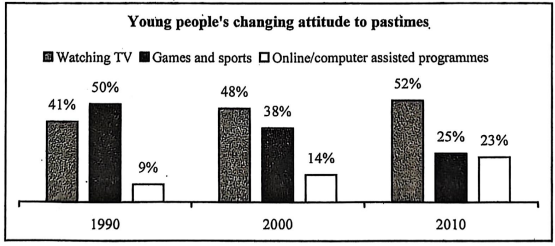
The Chart below shows young people's changing attitude to pastimes. Describe the chart in 150 words. You should highlight and summarize the information given in the

Question diagram
১৯ ইংরেজি ১ম পত্র

Complete the story about a village girl called Urmila, who became champion in a national swimming competition at the age of 14. Write no more than 180 words.Urmila was a little girl who grew up in a village named Patuair in Kishoreganj district. A small river called Phuleswari flowed through her village. At the age of five, Urmila used to go to the river with her father and started to learn swimming. Her mother did not like the idea of her daughter swimming in the river. But her father was happy to train Urmila to be a competent swimmer. Who knew that the little girl would become an accomplished swimmer one day!

২০ ইংরেজি ১ম পত্র

Write a letter to your younger brother about the importance of civic engagement for the betterment of a particular